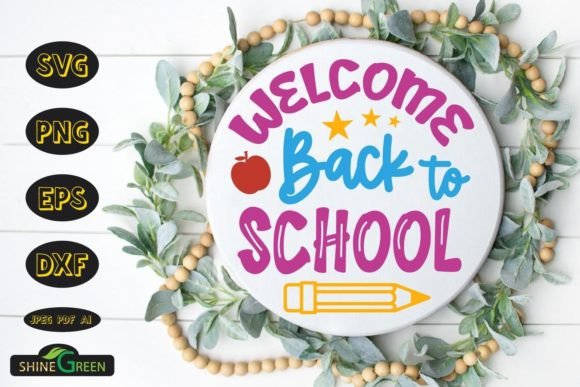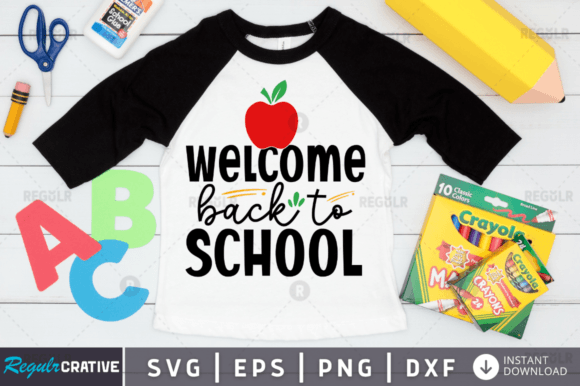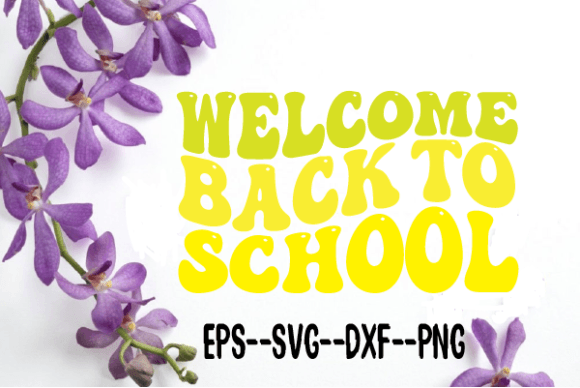
Welcome Back to School Wavy Retro SVG
First Impression: Playful, Nostalgic—But Is It Embroiderable?
As someone who’s stitched hundreds of school-themed designs—from kindergarten backpacks to teacher appreciation gifts—I opened Welcome Back to School Wavy Retro SVG expecting charm. And it delivers: the wavy baseline, rounded retro letterforms, and subtle bounce in the “W” and “B” immediately evoke 70s classroom posters and vinyl lunchboxes. But charm doesn’t stitch itself. My first question wasn’t “How cute is this?”—it was “Where does this live best *after* it’s embroidered?”
A Real-World Test: Custom Tote Bags for a Local Elementary Book Fair
Last week, I prepped six canvas tote bags for a PTA book fair—each with a student’s name + a theme. I tried Welcome Back to School Wavy Retro SVG on two: one as a full front chest design (approx. 5" wide), another scaled down to 3.5" for a child’s mini-tote. On medium-weight canvas with tear-away stabilizer? It held up beautifully—the curves stayed smooth, no puckering at the wave’s apex. The letter spacing remained legible, and the retro weight gave it presence without looking heavy. Parents responded warmly: “That looks like something my kid drew—but cooler.” That’s the sweet spot: nostalgic but polished, handmade but intentional.
Where It Shines—and Where It Needs Caution
Welcome Back to School Wavy Retro SVG isn’t built for micro-detail work or dense fill areas. It’s a clean, open-layout graphic—ideal for:
- Custom apparel: Sweatshirts, crewnecks, and cotton tees—especially when paired with a simple monogram or small icon (like an apple or pencil) beside it.
- Tote bag design and pillow covers: Its horizontal flow fills space gracefully without overwhelming fabric texture.
- Embroidered patch backing: The bold outlines and generous negative space make it highly stable for iron-on or sew-on patches.
- Baby embroidery on onesies or burp cloths: Softened thread colors (heather gray, oatmeal, sky blue) keep it gentle and age-appropriate.
Use caution on:
- Stretchy fabric like jersey knits—without proper cutaway stabilizer, the wave’s curve can distort under tension.
- Curved surfaces like caps: The width may exceed standard front-panel hoop limits; test fit before committing.
- Thin or delicate fabrics (e.g., silk-blend tea towels): High stitch density in tighter curves could cause shadowing or stiffness—reduce density manually if your machine allows.
- Dark fabric: The design relies on shape and rhythm more than fine contrast—stick to tonal thread (navy on black, charcoal on deep burgundy) rather than stark white unless you’re adding underlay.
Design Assets That Support—Not Replace—Your Craft Judgment
This is a Graphics-category file—not a native embroidery file. You’ll get 1 DXF and 1 EPS, both vector-based and scalable. That’s great for sublimation, print-on-demand, or digital mockups—but for machine embroidery, you’ll need to digitize it yourself or hire a digitizer. Don’t assume auto-digitizing software will handle the wave’s fluidity well. I ran it through two platforms: one flattened the curve into segmented arcs; the other preserved the motion but added unnecessary satin-stitch overlap. My advice? Treat it as strong design assets, not plug-and-play embroidery file. If you’re an Etsy seller bundling digital + physical goods, clarify that distinction upfront—it builds trust.
What It Adds to Your Handmade Product—and What It Doesn’t
Welcome Back to School Wavy Retro SVG elevates perceived value because it feels curated, not clip-art. Customers notice the intention behind the wave’s amplitude, the balanced kerning, the lack of visual clutter. That translates directly to higher willingness-to-pay on boutique shelves or craft fairs. It also supports brand consistency—if your shop leans into retro-modern aesthetics (think muted palettes, organic shapes, tactile finishes), this design fits right in.
What it doesn’t do: replace thoughtful execution. A poorly stabilized sweatshirt won’t look better just because the design is charming. A rushed satin-stitch outline on a curved edge will fray faster. And while it works for personalized gift projects, remember—adding names or dates means adjusting spacing and stitch count. Always run a test on scrap fabric first.
Practical Embroidery Designer Notes
Before stitching Welcome Back to School Wavy Retro SVG into your next commercial embroidery job or craft business launch:
- Check thread color contrast on both light and dark fabric swatches—retro doesn’t mean low visibility.
- Review stitch density in the thickest parts of the wave; reduce if needed for breathable fabrics.
- Confirm your hoop size accommodates the full width—especially if using it on caps or aprons.
- Inspect small details at actual stitch scale: zoom in on your embroidery software to verify corner sharpness and curve fidelity.
- Test it in black-and-white mockups—this design’s strength is in silhouette and rhythm, not color complexity.
- Use appropriate stabilizer: cutaway for stretchy knits, tear-away for stable weaves, and fusible for lightweight linens.
- Verify licensing terms before selling finished items or reselling the design as part of a digital embroidery file bundle—this listing states usage for sublimation, t-shirts, mugs, and pillows, but commercial embroidery rights aren’t explicitly confirmed.
Final Thought: A Design That Invites Connection
Good school-themed embroidery shouldn’t just say “back to class”—it should feel like a warm, confident hello. Welcome Back to School Wavy Retro SVG does that. It’s not flashy. It’s not overly detailed. But its rhythm, restraint, and quiet personality make it memorable in a sea of generic fonts and clip-art apples. Whether you’re stitching a personalized gift for a nervous first-grader or building a cohesive line of small shop product for back-to-school season, this design earns its place—not as background filler, but as a considered, human-centered detail.