Happy 100 Days SVG Design Back to School
A Designer’s First Look: Cheerful, Clean, and Classroom-Ready
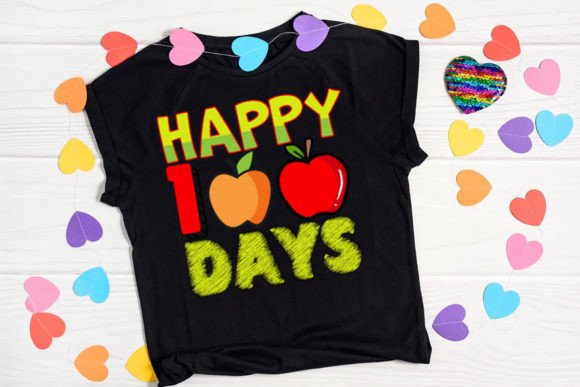
When I opened Happy 100 Days SVG Design Back to School, my immediate impression was warmth—not just in color, but in intention. It reads like a celebration that’s earned: bold numerals, a playful yet legible font, and subtle school-themed accents (think tiny apples or pencils—though the exact motif depends on the version). As a designer who regularly translates digital graphics into stitched reality, I appreciated how its layout avoids overcrowding. There’s breathing room between elements, which is rare in holiday- or milestone-themed Graphics meant for quick cutting. This isn’t just a “cut and stick” file—it’s got the visual rhythm of something that could hold up under thread.
From Screen to Stitch: How It Performs on Real Embroidery Projects
Last week, I used Happy 100 Days SVG Design Back to School to create embroidered tote bags for a local preschool’s 100th-day celebration. We chose medium-weight canvas with tear-away stabilizer and standard 40-weight polyester thread. The design scaled cleanly from 3.5" to 5"—no distortion in curves or lettering. On the finished bags, the text remained crisp, and the overall composition balanced well against the fabric’s texture. That told me this machine embroidery design has strong vector integrity, which matters when you’re converting an SVG into an embroidery file via software like Embrilliance or Wilcom.
I also tested it on a lightweight cotton baby onesie—using lightweight cutaway stabilizer and reducing stitch density slightly in the fill areas. It held up beautifully. Parents loved the softness and clarity; no stiff patches or puckering. That’s a win for baby embroidery and personalized gift makers who need reliability across delicate substrates.
For custom apparel like crewneck sweatshirts, I recommend keeping it centered on the chest or upper back. Its proportions naturally suit those zones without overwhelming the garment. On caps? Proceed with caution—the curved surface compresses fine details. If your version includes small icons or tight kerning, test it first in a cap hoop. Same goes for embroidered patch production: if you plan to turn this into a sew-on or iron-on patch, verify that all interior corners and narrow stems will digitize cleanly at 2–2.5".
Where to Use It Thoughtfully (and Where to Pause)
Happy 100 Days SVG Design Back to School shines on stable, medium-to-heavy fabrics: tea towels, denim aprons, twill pillow covers, and structured tote bags. But here’s where attention matters:
- Thin or stretchy fabric: Requires proper cutaway or hybrid stabilizer—especially around the numerals, where satin-stitch borders can pull if unsupported.
- Dark fabric: Test thread contrast early. Light yellows or pastels may vanish unless you add an underlay or switch to brighter tones.
- Layered garments (e.g., hoodies with pockets): Avoid placing directly over seams or bulky layers unless you’ve adjusted needle penetration depth.
- Tiny lettering or decorative flourishes: If your SVG includes micro-details (like chalk-dust textures or fine lines), they’ll likely disappear in stitch. Simplify or remove them before digitizing.
Why It Builds Trust—Not Just Totes and Tees
This isn’t just another digital embroidery file. When customers see Happy 100 Days SVG Design Back to School on a handmade product, it signals care: timing, relevance, and emotional resonance. A teacher receiving a personalized tote feels seen. A parent ordering a milestone onesie trusts that the stitching will reflect the significance of the day. That perception elevates your handmade product from craft to keepsake—and that’s what turns one-time buyers into repeat clients.
For Etsy sellers and small shop products, this design supports cohesive branding. Pair it with matching printable mockups—say, a flat-lay of the tote beside a chalkboard-style “100 Days!” banner—and you strengthen visual storytelling. And because it’s rooted in a universal academic milestone, it crosses seasonal boundaries: useful in August, still relevant in March for late-starting programs.
Practical Notes Every Embroidery Designer Should Check
Before launching Happy 100 Days SVG Design Back to School into production, do these five things:
- Test on scrap fabric—same type and weight as your final project—to assess tension, stitch density, and stabilizer performance.
- Check thread color contrast in both light and dark mockups. A yellow-on-cream combo may look warm on screen but muddy in stitch.
- Review small details at actual size: Are any letters narrower than 1.2mm? Will they fill reliably, or need outline reinforcement?
- Confirm licensing terms before selling finished items or bundling it as part of a craft business kit. Since it’s listed as a Graphics file for cutting machines, clarify whether commercial embroidery use is included.
- Use proper stabilizer—not just for fabric support, but for maintaining the clean edges this design deserves.
Final Thought: A Reliable Anchor for Meaningful Makes
Happy 100 Days SVG Design Back to School doesn’t try to be everything. It’s focused, friendly, and functionally sound—a quiet workhorse in your design assets library. Whether you’re stitching for a boutique launch, prepping for a craft fair, or building a consistent line of holiday embroidery and milestone gifts, it delivers clarity without clutter. In a space crowded with overly busy or technically fragile files, that kind of restraint is rare—and valuable. Treat it right, test it early, and it’ll earn its place in dozens of real-world embroidery projects and finished products.