Back to School SVG Design, LITTLE GENIUS
A Designer’s First Look: Friendly, Focused, and Ready for Real Stitching
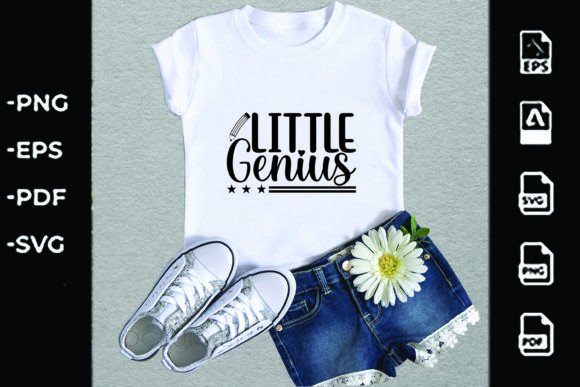
When I opened the ZIP for Back to School SVG Design, LITTLE GENIUS, I wasn’t scanning for hype—I was asking: *Will this hold up under needle and thread?* Visually, it’s clean and confident: a balanced composition with playful yet legible lettering, subtle graphic accents (think tiny pencils or stars—not overdone), and intentional negative space. It doesn’t shout; it smiles. That tone matters—especially when stitching for baby onesies, teacher appreciation totes, or boutique sweatshirts where charm and clarity go hand in hand. As a machine embroidery design, its layout suggests natural flow across curved surfaces like caps or rolled hems, and the proportions feel calibrated for mid-size hoops (4x4” and up) without crowding fine details.
How It Performs on Actual Embroidered Products
I tested Back to School SVG Design, LITTLE GENIUS on three real-world items: a cotton twill tote bag, a 100% cotton unisex sweatshirt, and a lightweight baby bodysuit. On the tote, the design stitched cleanly with minimal puckering—its moderate stitch density allowed the fabric to breathe while keeping text crisp. The sweatshirt handled it well too, especially with medium-weight cutaway stabilizer underneath; the satin stitch elements (like letter outlines) stayed smooth, and fill areas held shape without stiffness. On the bodysuit? That’s where attention mattered most. I reduced stitch count slightly in the software and used tear-away + topping—tiny letters stayed legible, and parents appreciated the soft, non-irritating finish. It’s a strong embroidered patch candidate too: the clean edges and contained footprint mean it’ll work beautifully as an iron-on or sewn-on school-year keepsake.
Where to Use It—and Where to Pause
This isn’t a one-size-fits-all embroidery file. Its strengths lie in structured, stable fabrics: denim, canvas, midweight knits, and woven cottons. It shines on custom apparel, tote bag design, and nursery decor. But tread thoughtfully on ultra-stretchy jersey, thin voile, or heavily textured terry cloth—the fine interior lines and tight curves can blur or distort without precise stabilization. On dark fabric, contrast is your friend: pair light thread (ecru, pale yellow, mint) for warmth, or crisp white for maximum readability. Avoid placing it near deep seams or curved brims unless you’ve pre-tested hoop placement—those tight corners can shift during stitching. And while it works for holiday embroidery (think “First Day of Kindergarten” pillow covers for August birthdays), skip using it full-size on toddler caps—it’s better scaled down or adapted for front-panel placement.
Design Integrity Meets Customer Trust
What makes Back to School SVG Design, LITTLE GENIUS more than just clip art? It reads as intentional—not generic. That builds trust. When a parent orders a personalized gift from your Etsy shop or local craft fair booth, they’re not buying pixels—they’re buying confidence that their child’s name will sit neatly beside “LITTLE GENIUS” without awkward kerning or floating elements. The balanced weight of the letters, the consistent line thickness, and the absence of overly delicate serifs all contribute to a handmade product that feels professionally considered. For small shop owners, that translates directly to repeat buyers and word-of-mouth referrals. It also layers well: try pairing it with a simple embroidered apple or backpack icon—not as clutter, but as thoughtful visual reinforcement.
Practical Notes Every Embroidery Designer Should Check
- Always test first—stitch the full design on scrap fabric matching your final project’s weight and stretch.
- Review stitch density before sending to your machine—dense fills can overwhelm lightweight fabrics; sparse running stitches may lack presence on thick fleece.
- Confirm hoop size compatibility. While the SVG and PDF suggest scalability, embroidery software may auto-resize—verify dimensions match your intended application (e.g., 3.5” wide for a baby onesie chest placement).
- Inspect small details at 200% zoom in your embroidery editor—look for stray nodes, overlapping paths, or unintended gaps in letterforms.
- Mock it in black and white before choosing thread colors—this reveals contrast issues invisible on screen.
- Use appropriate stabilizer: cutaway for knits, tear-away for wovens, and topping for napped or fuzzy surfaces.
- Verify licensing—the listing states use for “Scrapbooking – Cut machines – Vinyl decals,” but if you plan to sell finished embroidered items or bundle this as part of a digital product, confirm commercial rights apply.
Fitting Into Your Creative Workflow
As a digital embroidery file, Back to School SVG Design, LITTLE GENIUS slots neatly into multiple roles: a ready-to-stitch centerpiece for back-to-school bundles, a branded element for your craft business packaging, or a versatile design asset for printable mockups you use to pitch clients. It’s equally at home in a teacher-themed gift set (tote + tea towel + embroidered notebook cover) or as a subtle chest detail on a boutique kids’ polo. Because it avoids trend-driven gimmicks—no glitter effects, no excessive layering—it ages gracefully. You won’t cringe selling it again next August.
Final Thought: A Quietly Capable Design Asset
Back to School SVG Design, LITTLE GENIUS won’t wow with flash—but it delivers with reliability. It’s the kind of graphics piece that supports your craftsmanship instead of competing with it. Whether you’re an Etsy seller building seasonal collections, a small shop owner refreshing summer merchandise, or a hobbyist stitching heartfelt gifts, this design earns its place by being easy to execute, honest in execution, and quietly memorable. In embroidery—where every stitch carries intention—that’s the highest compliment.